Color Blind Test: the dot plate game
Ten plates, ten hidden numbers. How many can you read?
Ten dot plates, each hiding a number. Type what you see — or say you can't see one. This is a game built from computer-generated plates: it cannot tell you whether you are color blind, and it is not a medical screening. Screen brightness and night mode change how the dots look, so play in normal lighting.
First, a practice plate everyone should be able to read:
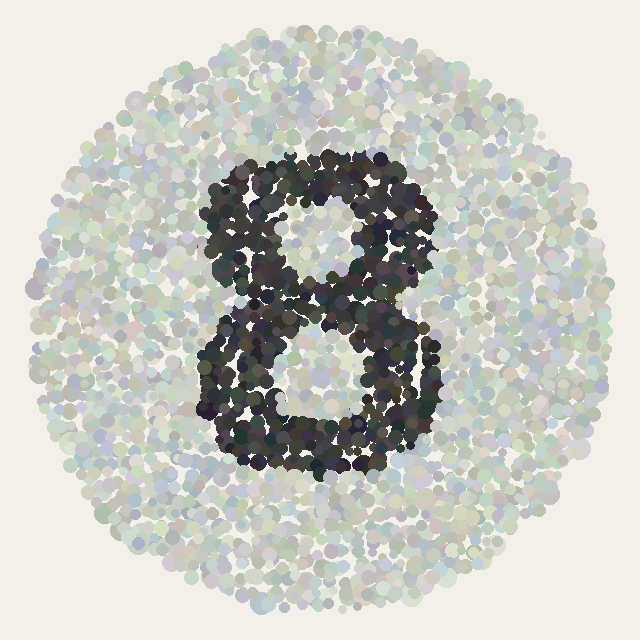
The practice plate hides the number 8. If you can't see it, check your screen brightness and zoom before playing.
How the plates work
Each plate is generated by a program: dots inside the number get colors from a red-orange family, dots outside get greens, and every dot's brightness is randomized on purpose — so the number can only be read by color, not by light and dark. For a viewer with typical color vision the number pops out. Along the red-green confusion direction the two families blend together, which is why plates like these are used as a quick color-vision game.
Only an eye-care professional with standardized charts and controlled lighting can assess color vision. If you struggle with several plates here, treat it as a nudge to get a proper check — not as a result.
Common questions
Is this the Ishihara test? No. The plates are generated by our own program; they are not copies of the Ishihara charts. The idea — numbers hidden in colored dots — is similar.
What does my score mean? Only how many of our 10 generated plates you read on your screen today. It is not a pass/fail and says nothing definitive about your eyes.